
The Magic of Deep Understanding
How A New Approach to Learning Made Me Smarter

I’ve been studying for my biopsychology exam for days but it just wasn’t sinking in. I kept looking at the practice questions and I couldn’t answer them. What was I doing wrong? Why couldn’t I memorize this stuff? I read it over and over but I couldn’t put it into practice. What the hell?
I stopped. I put my notebook down. I stepped back, and I asked myself what I could do differently. How was I trying to learn this stuff? I had the study guide and my notebook out and I was going through the material looking up the important points and writing them down. I was trying to memorize what I needed to know. I was studying with the goal of passing the exam. That was my problem.
I laughed at myself and I put away my study guide notes. I pulled up some videos on YouTube that explained brain chemistry and neurophysiology and I watched them. Then I opened up the lecture files and I thoroughly read the information. I didn’t look at my study guide at all. I stopped studying with the goal of passing the exam and started exploring with the goal of deeply and truly understanding how the brain works.
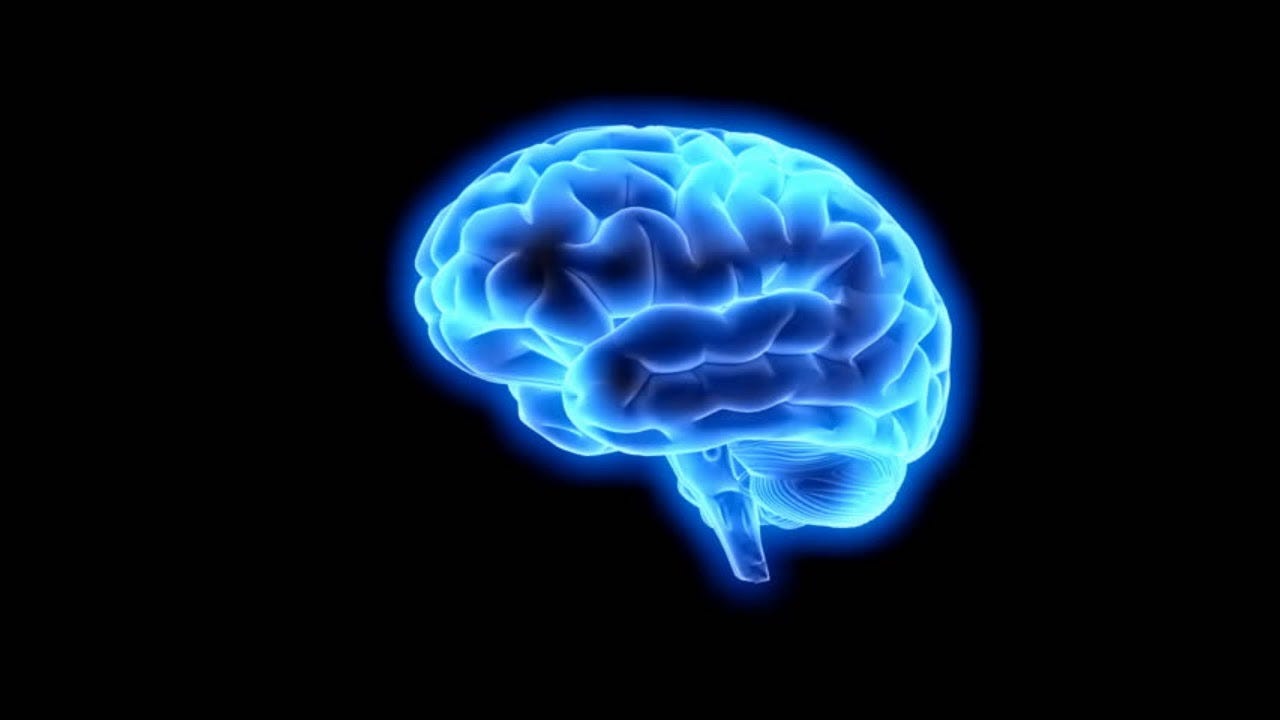
This is what we do that gets in the way of achieving the things we want to achieve. We read books about self-improvement and we look for the highlights. We write them down or commit them to memory. So, if I just do A B and C, then my life is going to get better. We’re looking for answers. We’re trying to pass the test. We are not seeking to understand deeply.
Once I shifted my perspective, two things happened. First, everything started to make a lot of sense. Second, learning started to feel fun. I wasn’t frustrated anymore. I was no longer trying to remember random facts that were only relevant to something that was too abstract for me to grasp.
OK, gray matter is composed mostly of cell bodies, dendrites, and axons compacted together for processing information, and white matter is mostly myelin-covered axons whose job is transmitting information. So, what does that look like? What does that really mean? When I was just scanning notes and lectures, I didn’t get it. It was hard to remember because it was just a bunch of random facts. But then I looked up a New York university video with a woman showing a real human brain and how it was put together and how the different parts communicated with one another. I looked up diagrams and tried to get a real understanding of why those different parts are where they are and what they do. Suddenly, it made a lot of sense. The outside of the brain is processing information that’s coming into it through axons on the inside and then it’s turning around and sending information back down through axons and that information is being carried to the rest of the body. I had a visual. I could picture the system. I knew what the process was so it made sense that the cell bodies were distal and the axons were on the inside, closer to the nerves that relay info to the body. The Myelin sheath that protects axons is light colored and so that’s why the white matter is white. I could see the bigger picture.
It’s difficult to remember random facts about something that you don’t understand, and it’s even harder to apply those random facts in any meaningful way. Maybe that sounds like really bad news because you don’t feel like you’ve got time to commit to deeply understanding every little thing that might make your life better. But here’s the thing, whether you’re trying to remember James Clear’s Atomic Habits or Miguel Ruiz’s The Four Agreements, if you’re trying to memorize Stephen Covey’s The Seven Habits of Highly Effective People or what Brené Brown teaches about Daring Greatly, if you don’t understand why those ideas are important, if you don’t understand why they work the way they do, then you’re just wasting your time. You’re never truly going to be able to effectively apply those concepts. If you’re going to spend time engaging with that material, you might as well dig deep and truly understand what you’re studying.

There’s a critical difference between learning how to do something and really understanding how something works and why. For example, I can learn how to play a certain solo on the guitar and with enough repetitions I’ll be able to play that solo from memory, but if I don’t understand how the guitar works, then that’s the only solo that I’ll be able to play until I learn another one and another one. If, instead, I learn to understand the fretboard and why it’s put together the way it is then I can start to improvise and be creative in that space. Any solo that I want to learn once I deeply understand the fretboard becomes much easier because I understand the foundational concepts.
Here’s another big thing. When you take the time to get curious and deeply understand whatever it is that you’re studying, you don’t just gain a deeper understanding of that topic, you gain a deeper understanding of understanding. You’re actually getting better at understanding things. And that means the next time something important comes up that you want to understand you will be more efficient at grasping it deeply. You will become, over time, a master of understanding.
But wait, there’s more. A lot of things overlap. Deeply understanding certain things is very closely related to understanding other things. For instance, understanding neuroscience is at least vaguely connected to understanding how electrical circuits work because our brains are kind of like electrical circuits. Additionally, a lot of things that seem important to understand (especially about our own bodies and our health) are deeply interrelated, so as you learn about one you are building a foundation for learning about the others and each subsequent related topic will be easier to deeply understand.
When I studied massage therapy, I had to take anatomy, pathology, and kinesiology classes, so now studying biopsychology is much easier because I already have a solid foundation of understanding of various parts of the body, the chemical signals they use to communicate, and how exogenous substances can affect them.
This interrelated understanding is something that my dad could tell us about. He always seemed like a super-genius to me. He could work on cars, fix the electricity in the house, fix the plumbing, and build just about anything. But if you followed your dad around as a kid, like I did, you might’ve started to realize how interconnected all of those skills are. Even just knowing which tools are which and how to use them carries over from one of those fields to the others.

So, you see, there are foundational kinds of understanding that can support you in learning about a lot of different things. Combine that with just becoming better at understanding in general, and very quickly you will start learning and retaining far more than you ever thought you could, and certainly more than you did when you were just trying to remember the facts and pass the test.
Very very good! I wish I would have had this perspective in grade school and core class college.
Amazing work!
I’m so very proud of you!!! This is all truth! I’m so excited to see, visually, this click in you. It’s best we learn our own ways of learning to understand life. Love you Barb!! Keep going, GROWING! 🖤